Panda Express Kung Pao Chicken Recipe for Easy Copycat Flavor
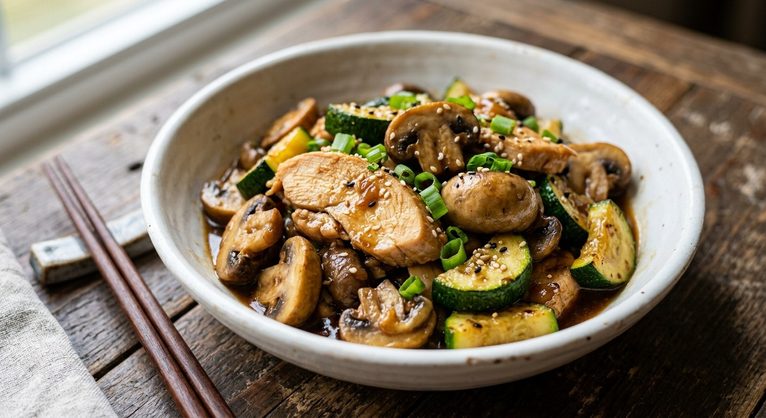
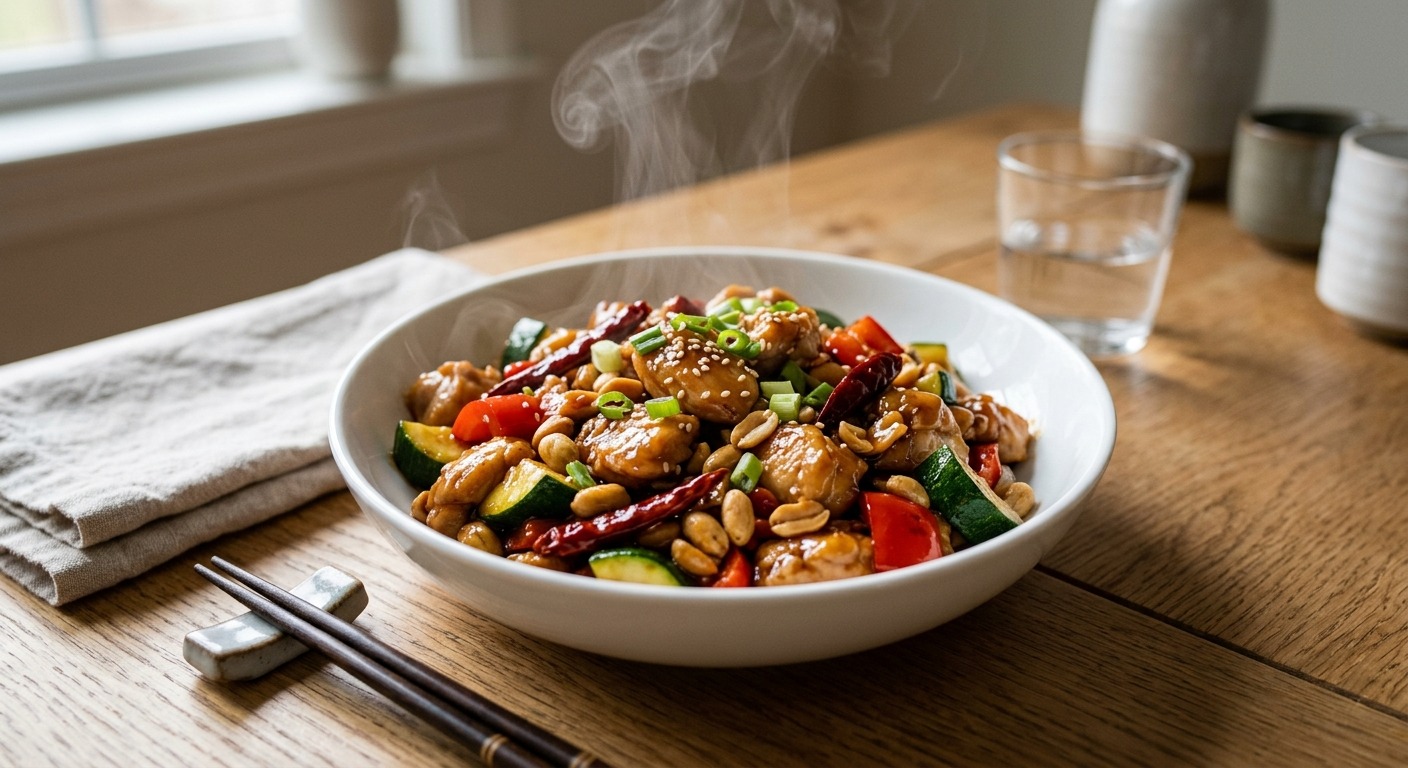
Copycat Panda Express kung pao chicken combines velveted chicken breast, zucchini, red bell pepper, peanuts, and dried chilies in a sweet-savory brown sauce made from soy, hoisin, oyster sauce, and sesame oil. It’s milder and saucier than traditional Sichuan kung pao, ready in about 30 minutes, and easy to customize for spice level or dietary needs.
Panda Express Kung Pao vs. Classic Sichuan: What’s Different?
Panda Express kung pao chicken and traditional Sichuan gong bao chicken share a name and a few ingredients, but the similarities mostly end there.
|
Feature |
Panda Express Version |
Classic Sichuan Gong Bao |
|
Protein |
Chicken breast, diced |
Chicken thigh, often with skin |
|
Sauce |
Sweeter, thicker, cornstarch-bound |
Thinner, vinegar-forward |
|
Heat source |
Dried chilies (mostly for flavor, not eaten) |
Dried chilies + Sichuan peppercorn (“ma la” numbing heat) |
|
Vegetables |
Zucchini, red bell pepper |
Typically none beyond scallion/celery |
|
Vinegar |
Minimal or none |
Chinkiang black vinegar, prominent |
The Panda Express approach favors a glossy, sauce-heavy stir-fry that appeals to a broader American palate, while Sichuan gong bao leans into the numbing-spicy “ma la” sensation and a sharper, more savory profile.
Ingredients You’ll Need
This copycat Panda Express kung pao chicken recipe sticks to the core ingredient list diners recognize:
- Chicken breast thinly sliced or diced into bite-sized pieces
- Zucchini sliced into half-moons or cubes
- Red bell pepper cut into 1-inch pieces
- Dried chilies whole, for aroma and mild background heat
- Roasted peanuts added at the end for crunch
- Scallions chopped, for garnish and freshness
The Panda Brown Sauce: What Goes In It?
The sauce is what ties the dish together, and it’s simpler than most people expect:
|
Ingredient |
Role |
|
Soy sauce |
Salty, umami base |
|
Hoisin sauce |
Sweetness and depth |
|
Oyster sauce |
Savory richness |
|
Sesame oil |
Nutty aroma |
|
Sugar |
Balances the salt and acid |
|
Cornstarch |
Thickens the sauce to a glossy coating |
|
White pepper |
Subtle background heat |
|
Chili (flakes or oil) |
Adjustable spice |
Whisk these together in a bowl before cooking so the sauce comes together quickly once it hits the hot pan.
How to Make Kung Pao Chicken Like Panda Express: Step-by-Step
Step 1: Velvet the Chicken
Velveting is the technique that gives takeout chicken its signature silky texture. Marinate the chicken in a mix of soy sauce, a splash of Shaoxing wine, cornstarch, and a touch of oil for at least 20-30 minutes. This coats the meat and seals in moisture during the high-heat sear.
Step 2: Sear the Chicken
Heat oil in a wok or skillet until very hot. Lay the chicken in a single layer and sear until golden, about 1-2 minutes per side. Remove and set aside it will finish cooking later.
Step 3: Stir-Fry the Vegetables
In the same pan, add the zucchini, red bell pepper, dried chilies, and peanuts. Stir-fry for 2-3 minutes until the vegetables are just tender but still crisp.
Step 4: Build and Add the Sauce
Stir the premixed sauce (cornstarch settles, so give it a whisk) and pour it into the pan with the chicken and vegetables. Toss everything together for 1-2 minutes until the sauce thickens and coats every piece.
Step 5: Toss and Garnish
Finish with chopped scallions and serve immediately over rice.
How Spicy Is Panda’s Kung Pao Chicken, Really?
Panda Express kung pao chicken registers as mild-to-medium on the heat scale, especially compared to its Sichuan counterpart. Dried chile de árbol, commonly used in copycat versions, measures an estimated 15,000-30,000 Scoville Heat Units (SHU), while Tien Tsin chilies run higher at an estimated 50,000-75,000 SHU. Because only a handful of whole chilies are used and they’re rarely eaten directly the dish’s actual perceived heat stays fairly tame.
Want more spice? Add extra dried chilies, a spoonful of chili crisp, or a pinch of crushed red pepper directly into the sauce. Want less? Remove the chilies before serving or skip the white pepper.
Nutrition: Homemade vs. Restaurant
Nutrition numbers for Panda Express kung pao chicken vary by source and portion. One third-party nutrition database (Fooducate) lists the entrée at approximately 240 calories, while another source cites a smaller “kids” portion closer to 200 calories. Panda Express’s own bowl and plate combinations (entrée plus base) range much wider roughly 360 to 1,170 calories for bowls and 540 to 1,730 for plates, depending on sides chosen. For the most accurate figure, check pandaexpress.com’s official nutrition page directly, since exact per-entrée data wasn’t independently verifiable here.
Homemade versions give you more control, but exact calories depend heavily on oil quantity, sugar, and peanut portions:
|
Estimated Calories* |
Sodium |
Control Level |
|
|
Restaurant entrée |
~240 (varies by source) |
Typically high |
None |
|
Homemade copycat |
Varies by recipe |
Adjustable |
Full |
*Homemade figures are estimates only and will shift based on your specific ingredients and portions.
Serve It With
Round out your plate the way Panda Express does:
- Chow mein recipe classic stir-fried noodles
- Fried rice recipe a fast, flavorful base
- Steamed white or brown rice for a lighter option
Frequently Asked Questions
Is Panda Express Kung Pao Chicken Gluten-Free?
Not as served Panda’s soy sauce contains gluten. For a homemade copycat version, substitute tamari or a certified gluten-free soy sauce and check your oyster and hoisin sauce labels, since many contain wheat-based thickeners.
Is This Recipe Safe for a Nut Allergy?
No, traditional kung pao chicken contains peanuts as a core ingredient. For a nut-free copycat, simply omit the peanuts entirely or substitute toasted sunflower seeds for a similar crunch without the allergen risk.
Does Panda Express Use White or Dark Meat Chicken?
This copycat recipe uses chicken breast, which is leaner and closer to what’s typically associated with the fast-casual version. Chicken thigh works too, offering a juicier bite if you prefer richer flavor over leanness.
Can I Make Kung Pao Chicken Ahead of Time?
Yes. Marinate the chicken up to a day in advance and chop vegetables ahead of time. Store components separately in the fridge, then stir-fry fresh for the best texture the dish cooks in under 10 minutes once prepped.
How Many Calories Are in Kung Pao Chicken?
Estimates vary by source: one nutrition database lists the restaurant entrée at roughly 240 calories, while homemade versions depend on oil and sugar quantities. Always verify restaurant figures on pandaexpress.com’s official nutrition page.
How Spicy Is This Dish on a Scale of 1-10?
Most copycat versions land around a 2-3 out of 10, since dried chilies are used mostly for aroma rather than direct heat. Add chili crisp or extra chilies to push it toward a 5 or 6.
Can I Substitute the Shaoxing Wine?
Yes. Dry sherry or a splash of rice vinegar diluted with water both work as substitutes if Shaoxing wine isn’t available. The flavor shifts slightly, but the marinade still tenderizes the chicken effectively.
How Do I Reheat Leftover Kung Pao Chicken?
Reheat in a skillet over medium heat for 2-3 minutes, adding a splash of water or stock to loosen the sauce. Microwaving works too, but the vegetables may soften more than they would on the stovetop.
Can I Freeze This Recipe?
Yes, though texture changes slightly. Freeze in an airtight container for up to 2 months, then thaw overnight in the fridge before reheating gently on the stovetop to help the vegetables retain some bite.
Is Homemade Kung Pao Chicken Cheaper Than Panda Express?
Generally, yes. A homemade batch serving 4 typically costs less than four individual entrées from Panda Express, especially since pantry staples like soy sauce and cornstarch are reused across multiple meals.